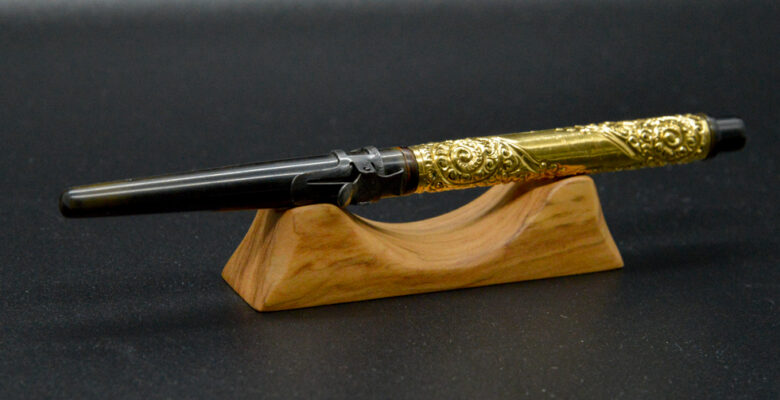
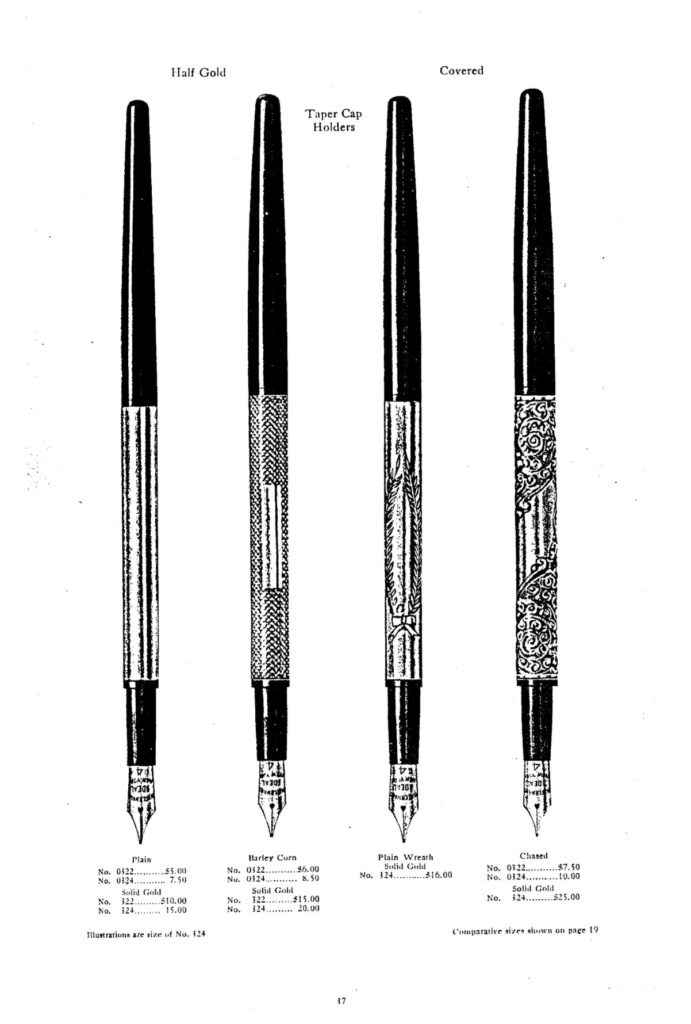
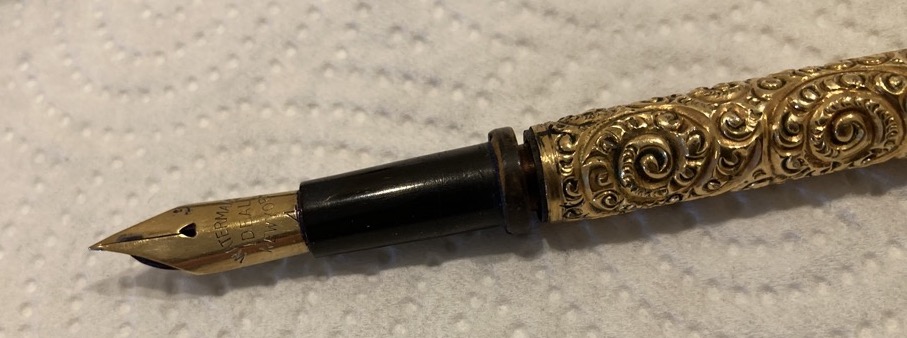
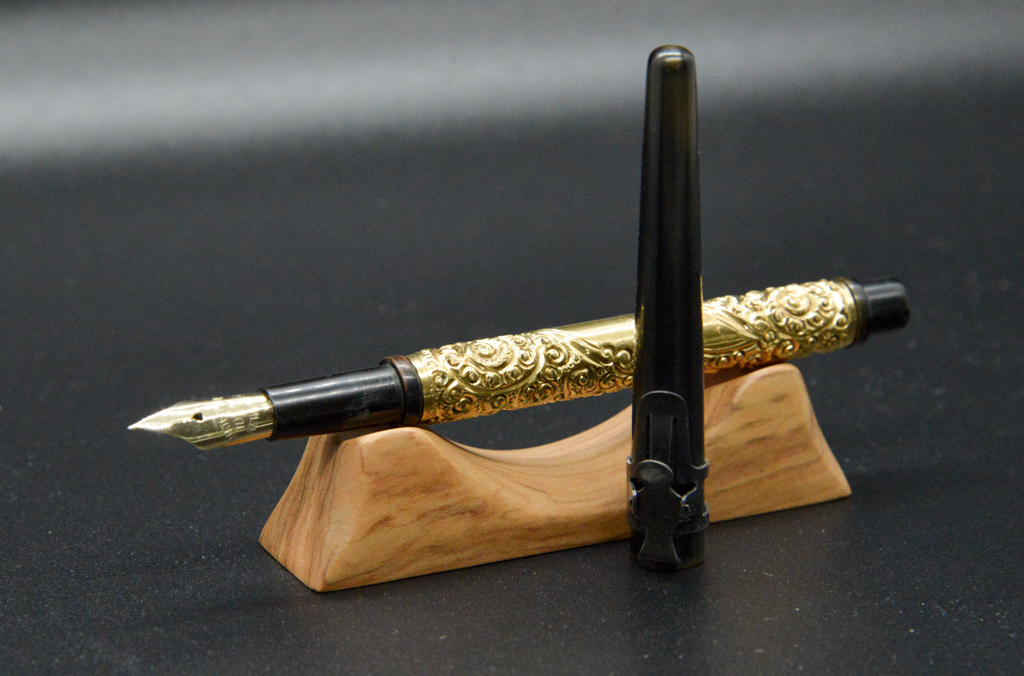
The Waterman 0324 was made between 1900 and 1909. It shares some characteristics with this pen, but not enough that I think that they’re related. According to Waterman’s Standard Numbering System shown here, then the model number can be decoded as follows:
0: Gold filled 3: 14 Kt Gold cap covered 2: Regular Type (Taper Cap eyedropper) 4 : Nib size (feeder diameter in mm)
You can see this pen on page 17 of the 1908 Catalogue, where it is listed as selling for $10, which corresponds to about $360 today.
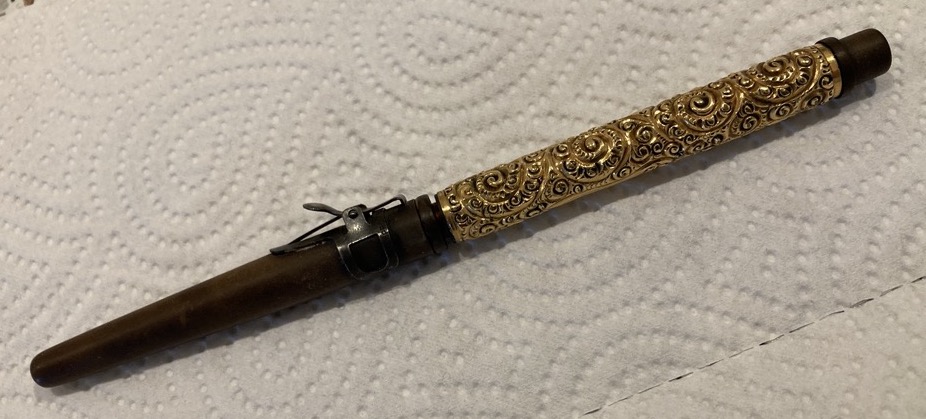
Since it’s about 115 years old, bringing this one back to life took some patience… Luckily, apart from a crack in the lip of the cap, it was in as good shape as can be expected for a pen this old.
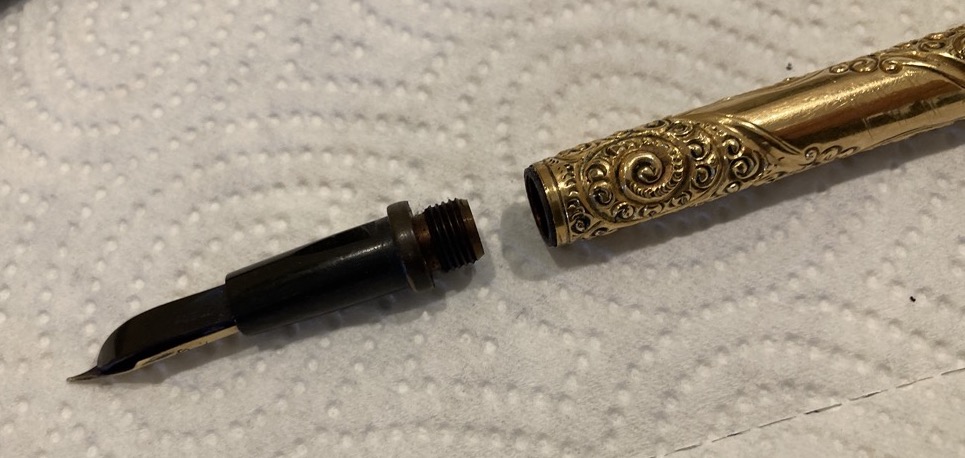
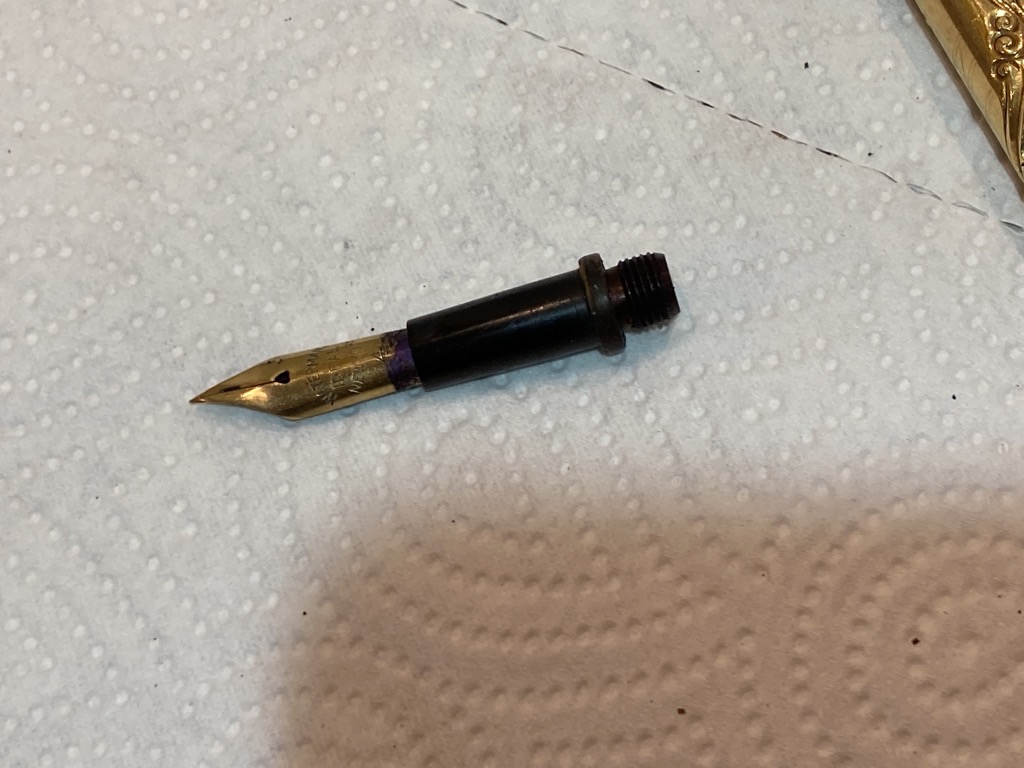
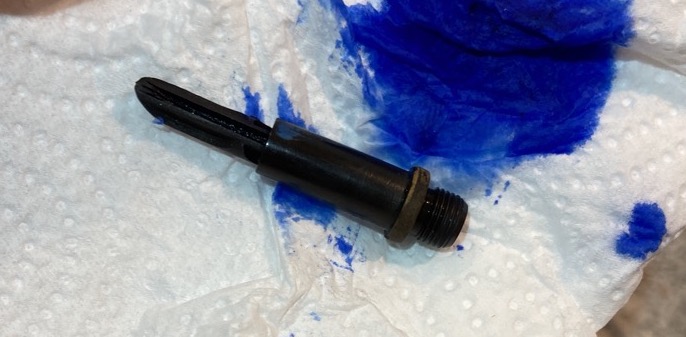
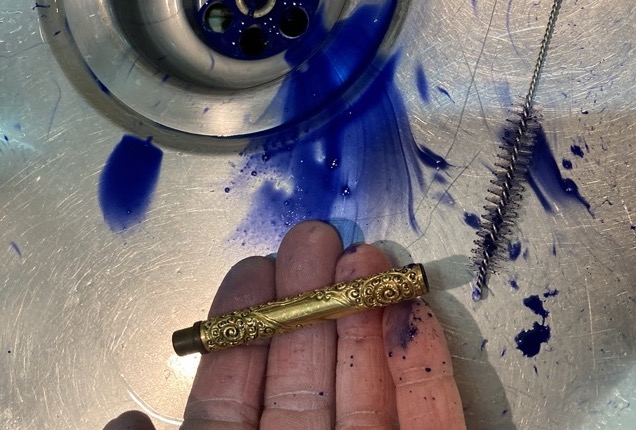
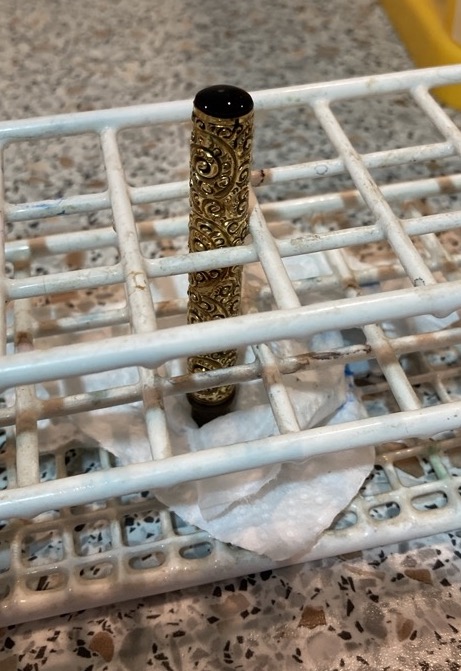
Notice that the section is not completely seated into the barrel.The feeder is sitting farther out than it should – and the gap between the section and barrel is quite obvious here. So is 100 years of oil and dirt in the rose pattern.The first step was to carefully unscrew the section. This took about 20 – 30 minutes of gentle heating and turning and heating and turning and heating… you get the idea…Although the feeder wasn’t too interested in coming out, the nib was not difficult to slowly extract.The feeder and section + a little water = mess.Lots of old, dried ink in the barrel. I didn’t bother trying to revive this. Cleaning it out was just a matter of filling with water, brushing, and repeating that process.If you have to soak an old pen, it’s smart to only soak the insides. This test tube rack makes an excellent holder.
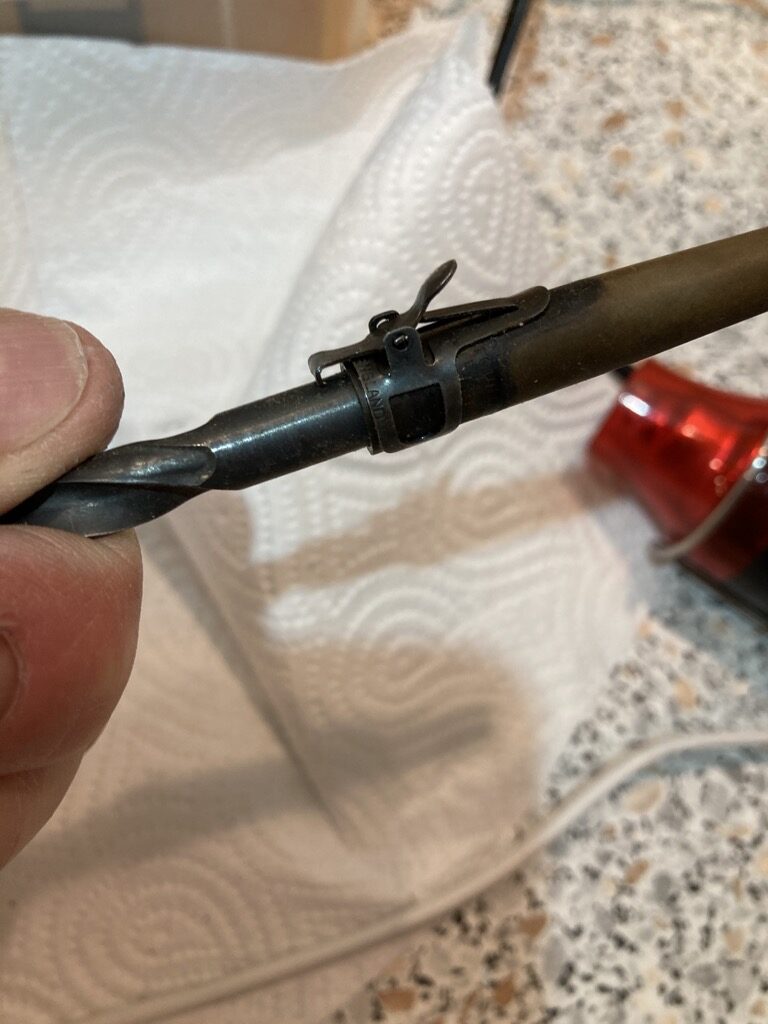
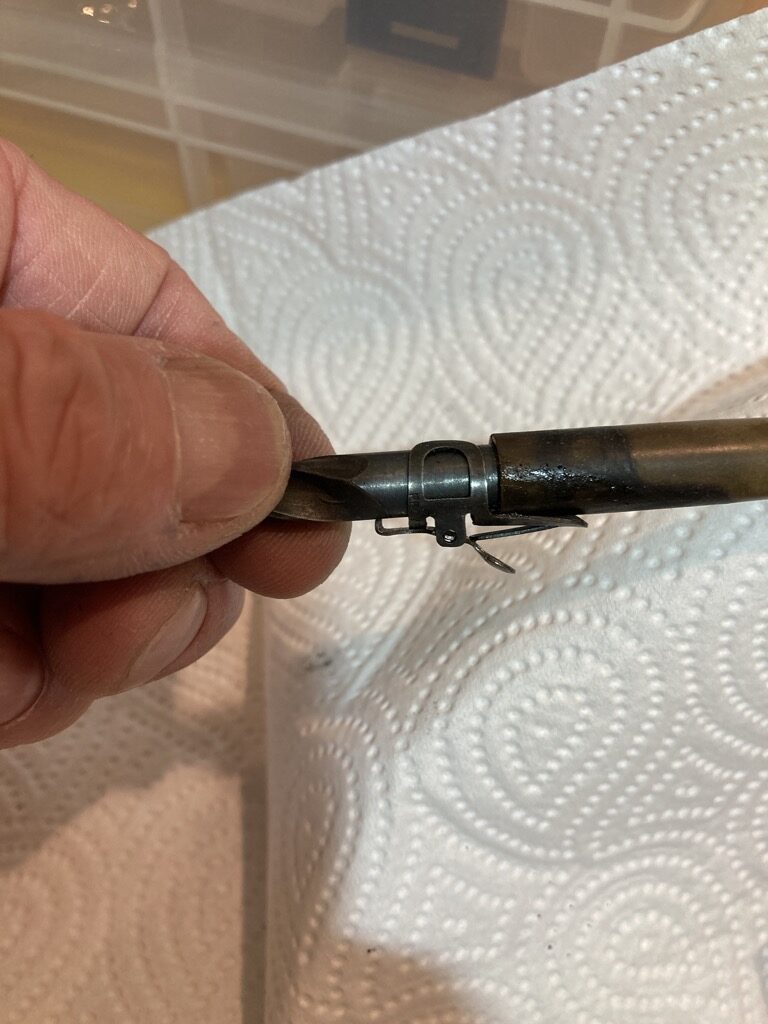
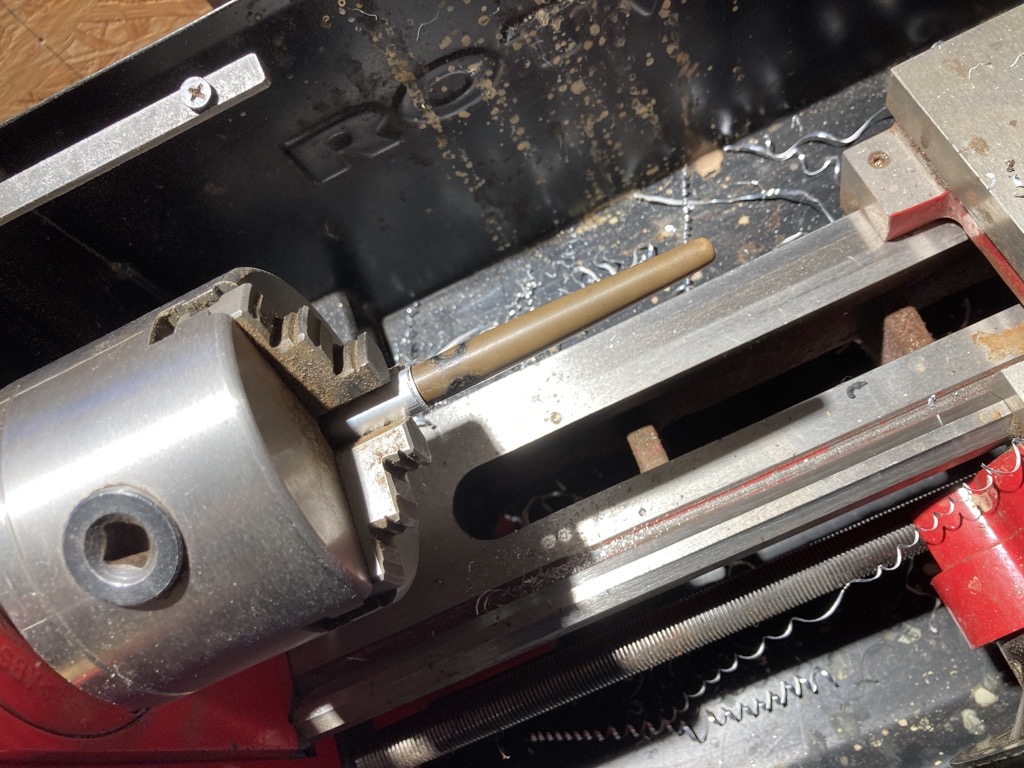
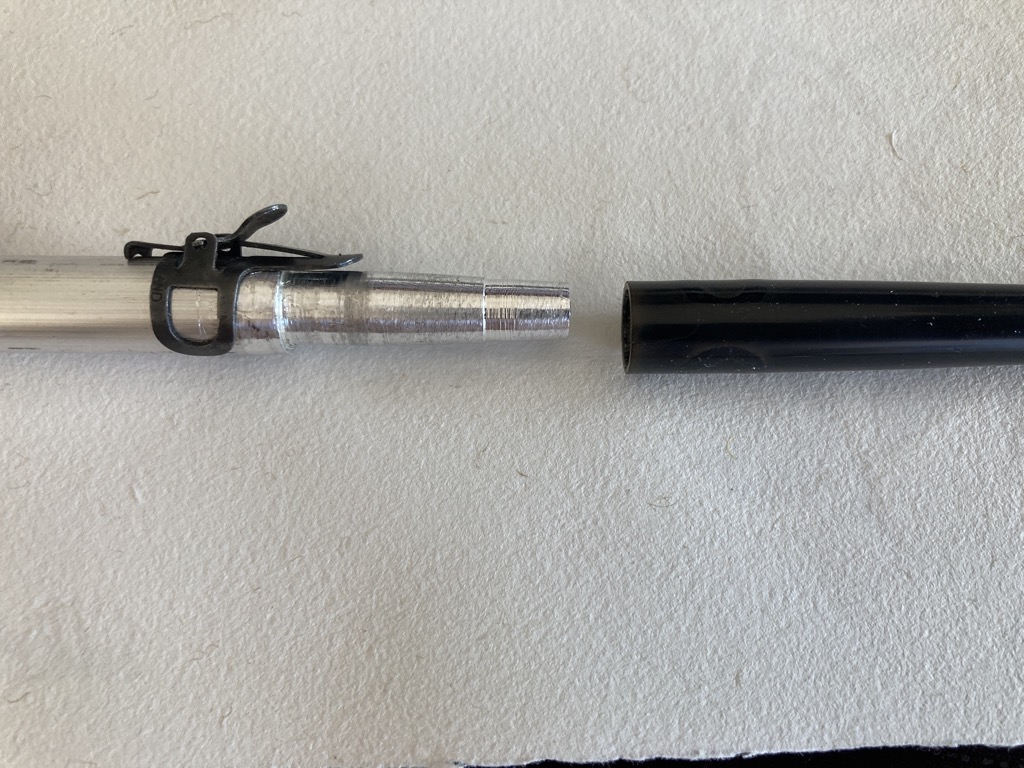
The next step was to gently work the clip off without cracking the lip more than it already is. To do this, I initially used the back of a drill bit to support the inside of the cap, but later I turned an insert out of aluminium (seen below).
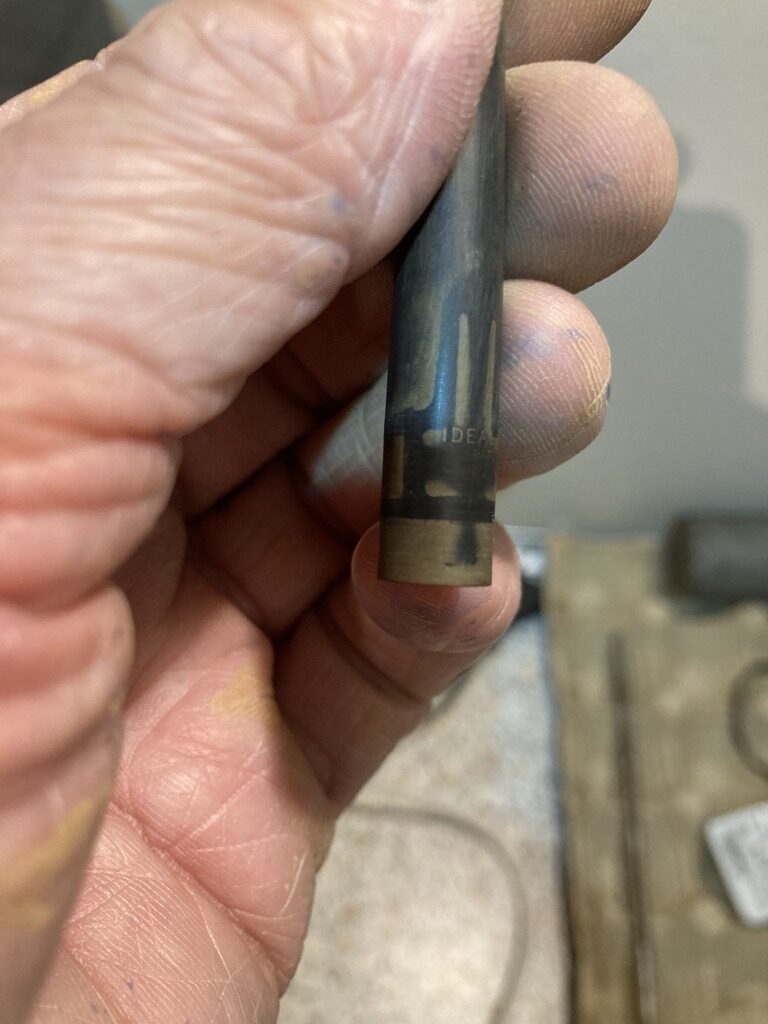
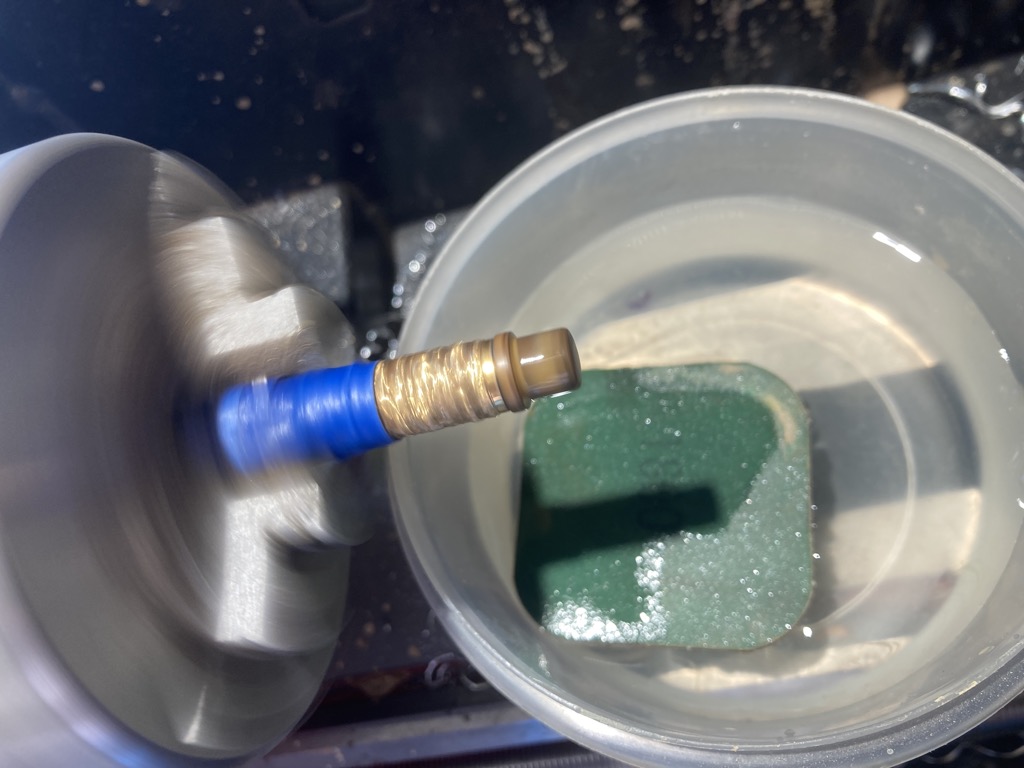
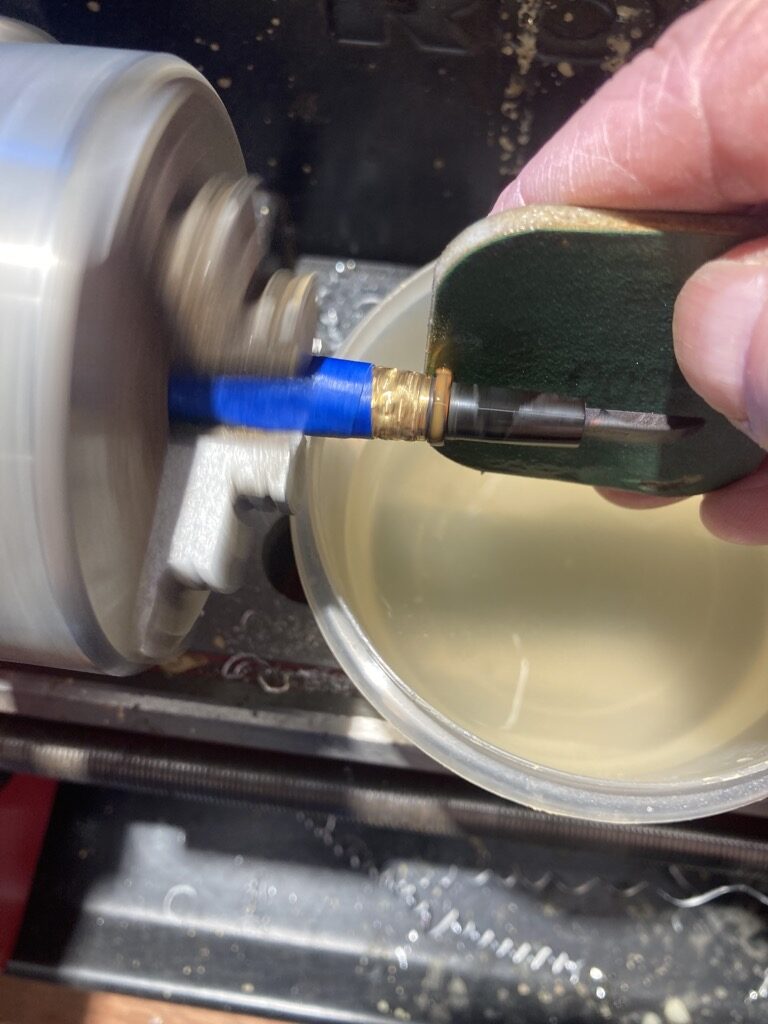
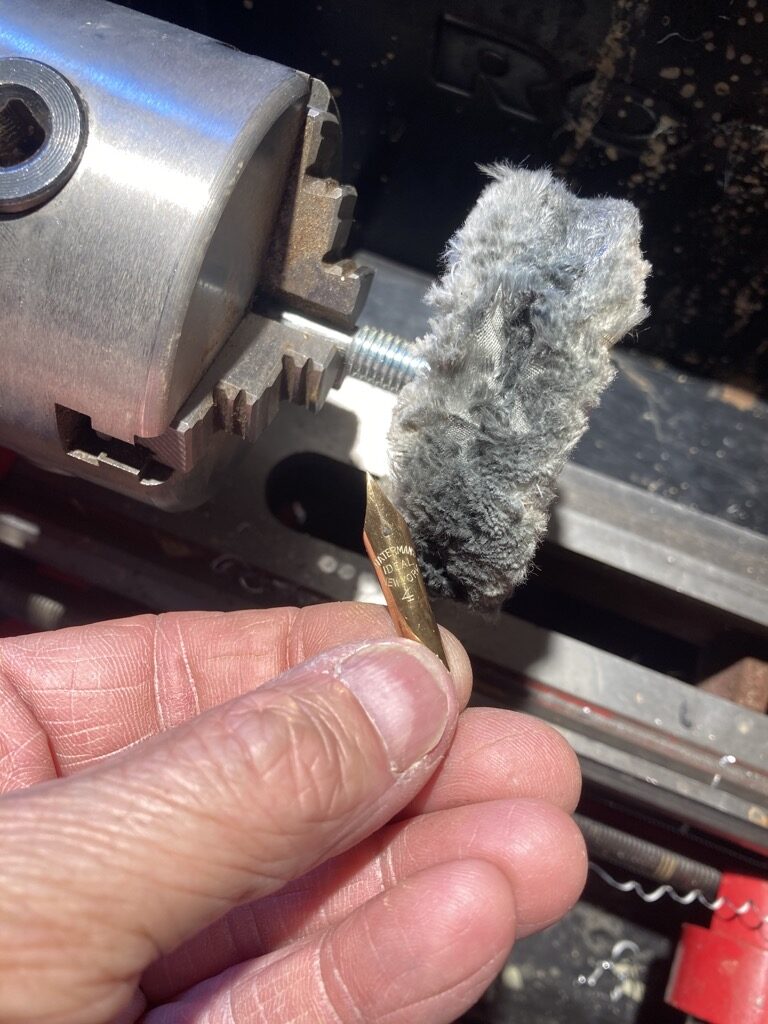
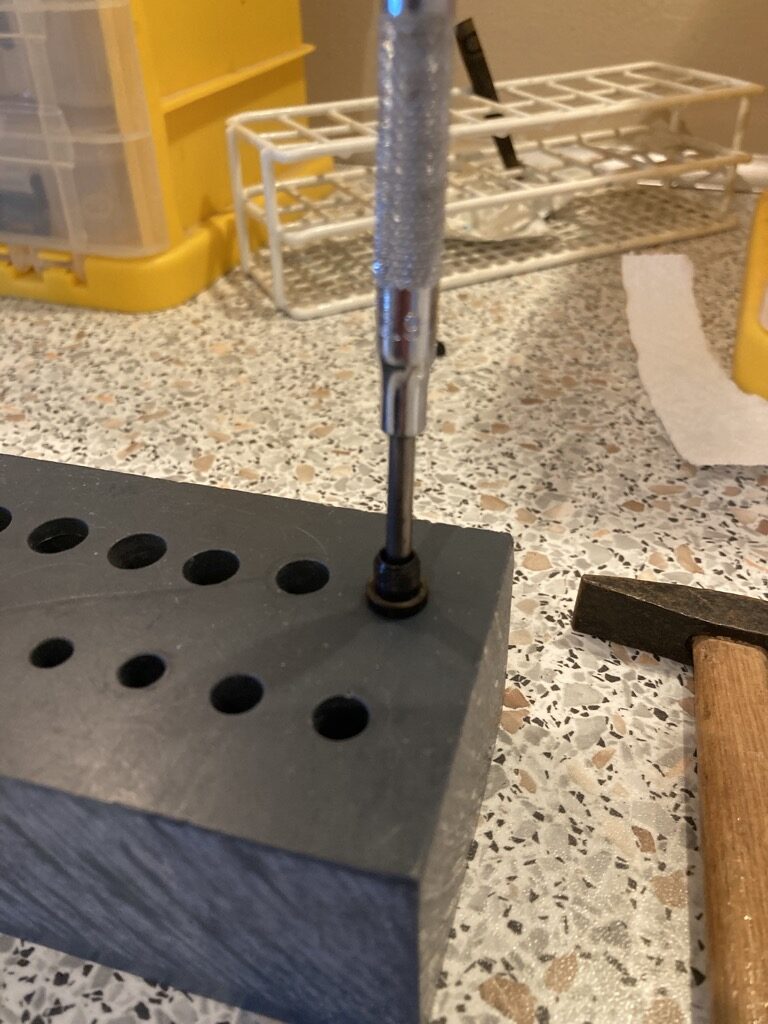
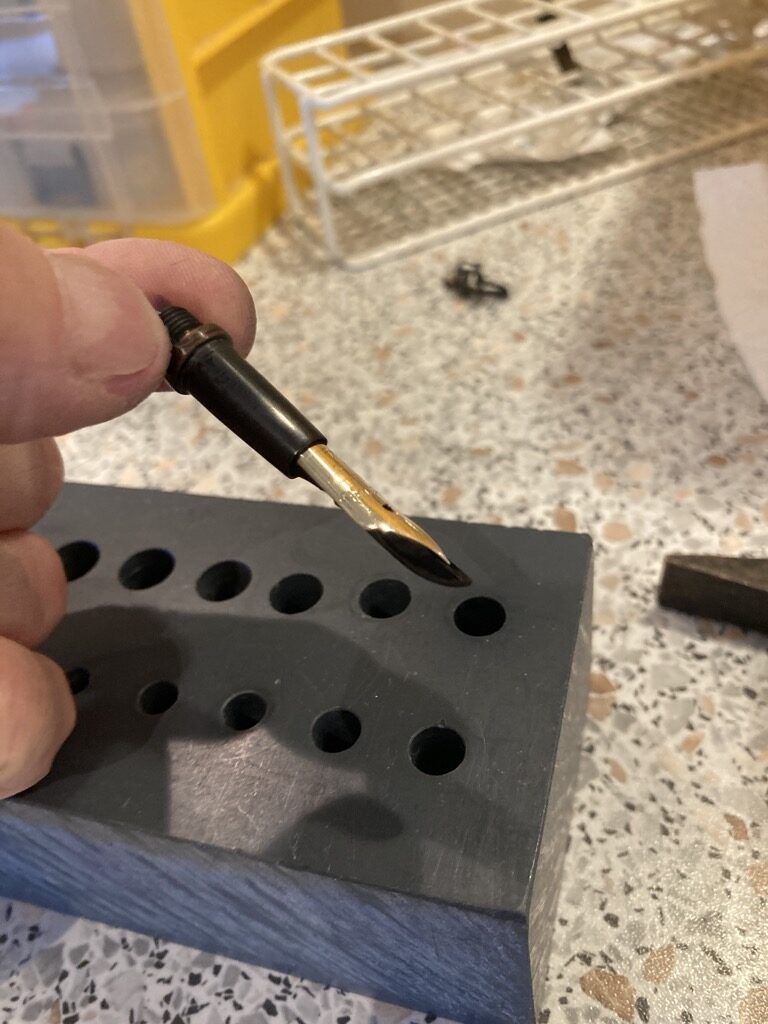
Getting ready to lightly sand the layer of sulphur off the cap.After a little wet sanding with a 3600 grid micromesh, the imprint appeared.Wet-sanding the ebonite end of the barrel. Once-upon-a-time, the cap could have been posted on this to make it a desk pen. However, this is no longer possible due to some shrinkage on that barrel end. So, I’m not too worried about taking off a little to clean it up.Wet-sanding the section, being VERY careful to not touch the feeder.Getting ready to polish the nib. I normally do this running the wheel backwards, so it’s running upwards on my side. This gives me better control of the nib.I decided that the feeder had to be punched out. This took some heating and VERY gentle taps from that tiny hammer. I was nervous about cracking the collar on the section.
On its way out.
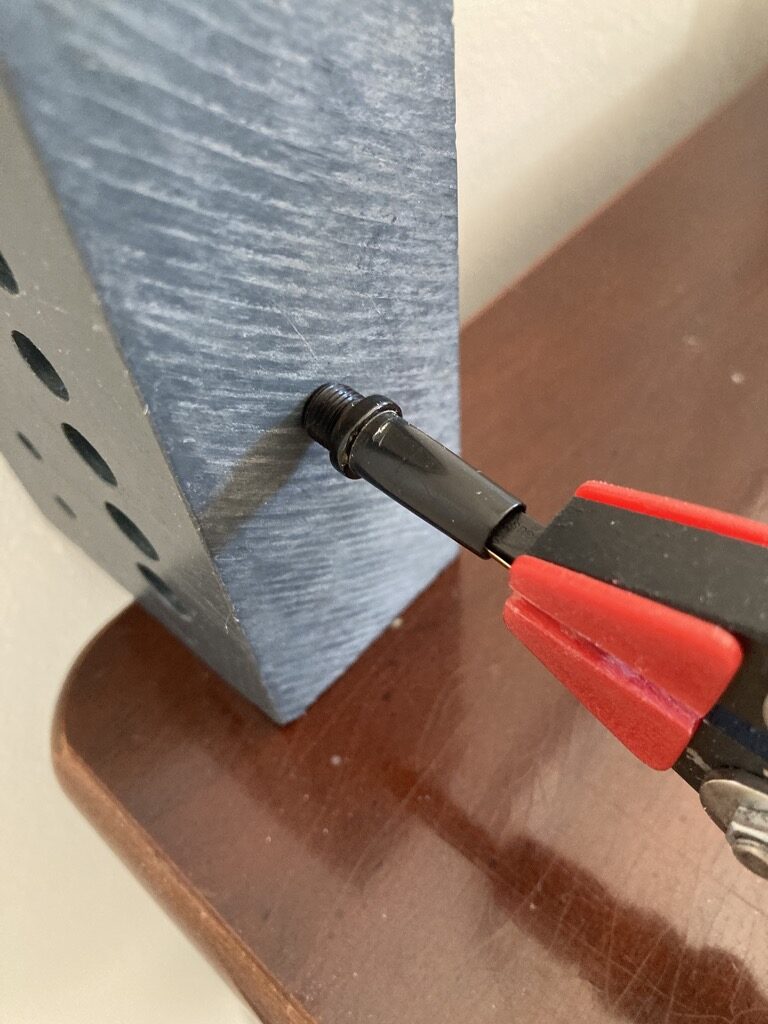
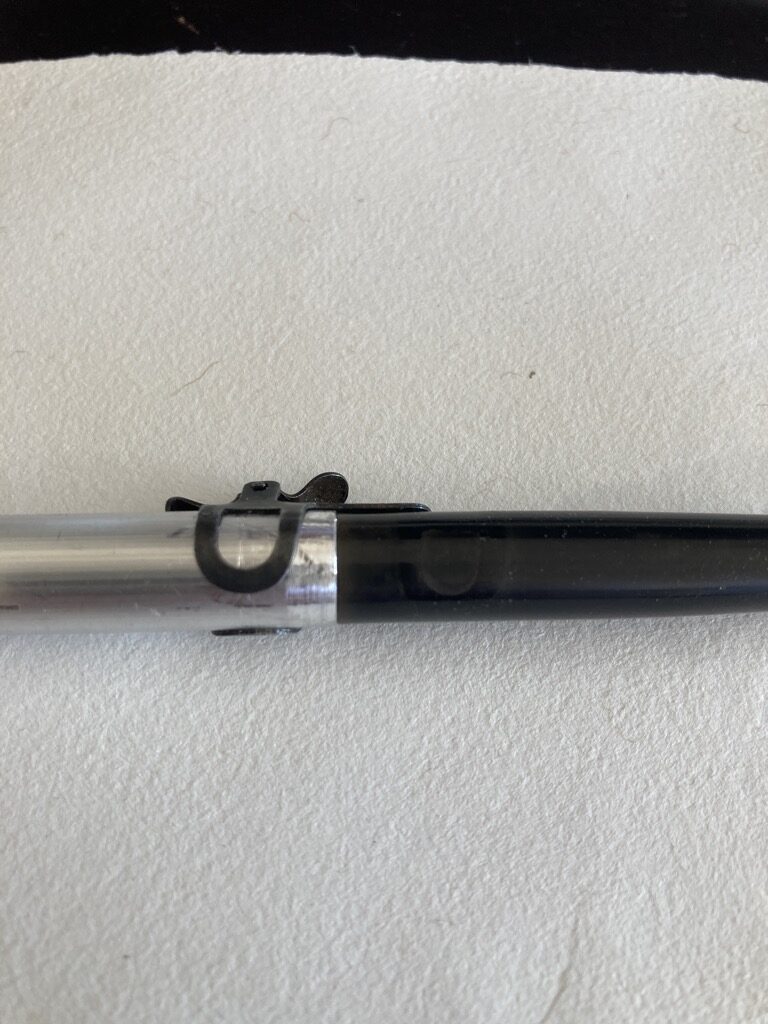
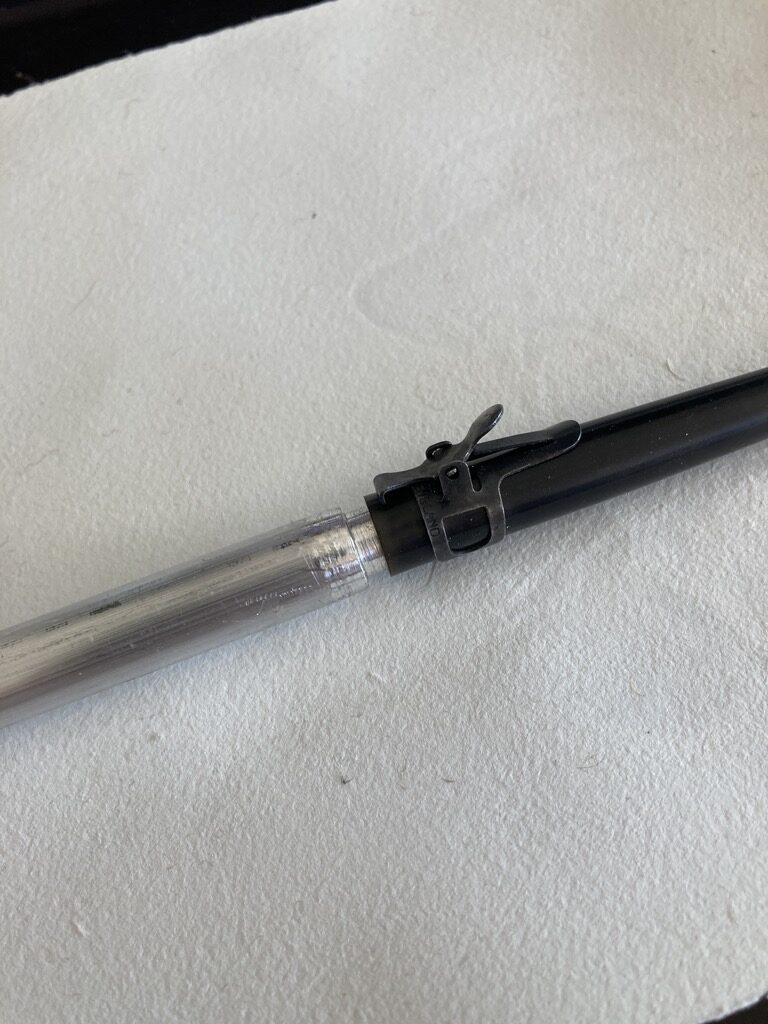
After a little heat was applied to the section, I re-inserted the feeder and nib with my parallel-jaw pliers.The clip is prepared to go back on the cap.I’m trying to align the rotation of the clip to match the mark of its original location.Back in place!
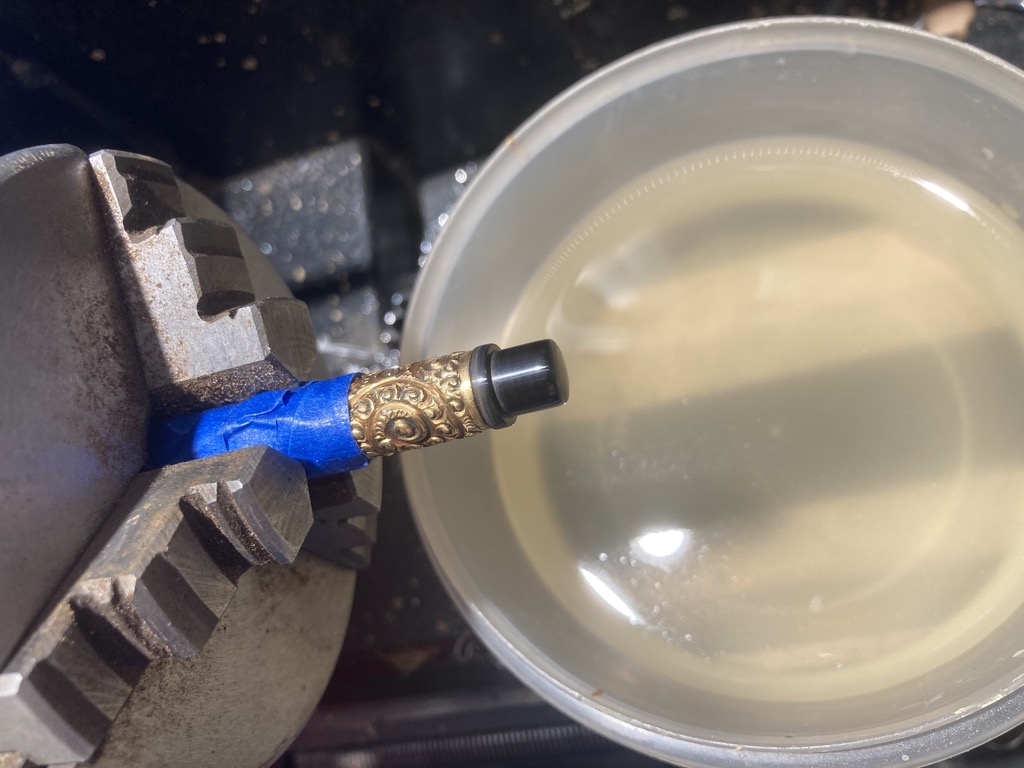
The last thing to do was to use a soft toothbrush and some toothpicks to clean the blacked oil and dirt from the gold pattern on the barrel. I might choose in the future to go all the way with this, but for now, I like the contrast the dark areas provide in the relief.
I didn’t want to take out all of the scratches. This would have meant taking off too much material, and besides… it should look a little like someone has used it in the past 100+ years…